
Disclaimer: azhvacdirect.com is sponsored and may earn commissions on products to help keep the site operating.
Smarter Control, Smarter Savings
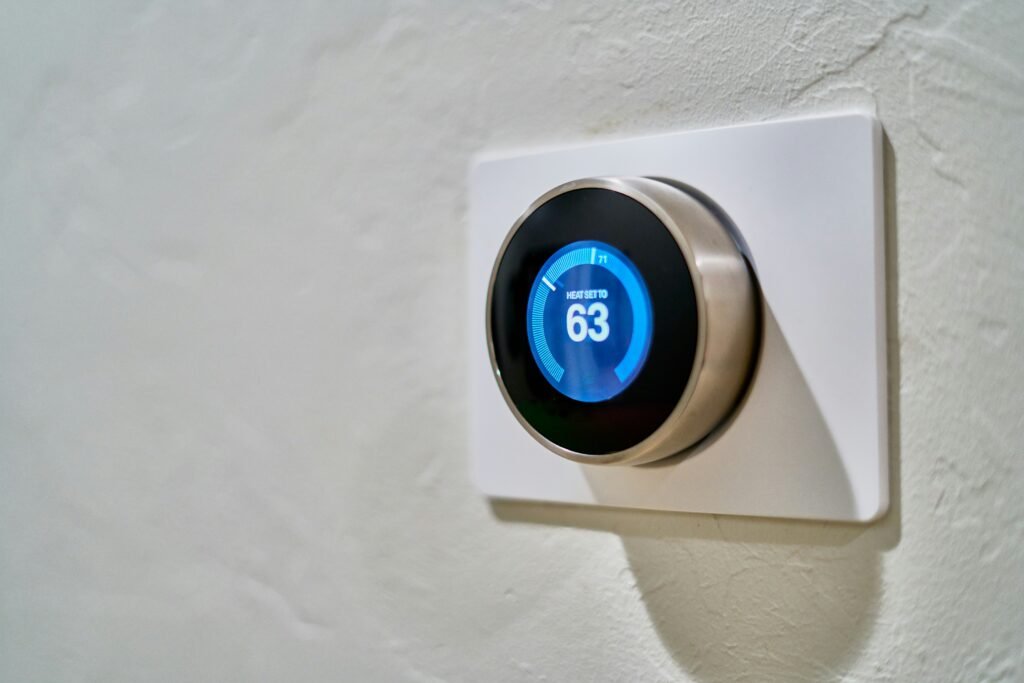
Upgrading to a smart thermostat offers a powerful combination of convenience and efficiency. Imagine adjusting your home’s temperature from your phone, whether you’re on the couch or on your way home from work, or simply asking your voice assistant to make it a little warmer. Beyond this modern convenience lies a significant practical benefit: energy savings. According to Energy Star, homeowners can save around $50 a year on energy bills, with some manufacturers claiming savings of $100 or more. This guide is designed to help you navigate the top models of 2026 and choose the perfect smart thermostat that fits your home, budget, and lifestyle.
Key Factors to Consider Before You Buy
Before you add a smart thermostat to your cart, it’s crucial to understand a few key technical details. Ensuring compatibility with your home’s systems will save you time and frustration.

Step 1: C-wire, or “common wire,” is a low-voltage wire that provides continuous power from your HVAC system to your thermostat. This is essential for powering the Wi-Fi connections and bright screens of most smart thermostats. While nearly all modern thermostats use a C-wire, many older homes may not have one. Fortunately, some thermostats are designed to work without one, such as the Google Nest Thermostat and the Nest Learning Thermostat. Moreover, other models may come with a power extender kit that can be installed as a workaround. If you want to purchase a C-wire adaptor, this one by Viivria is a popular choice.
Step 2: HVAC Compatibility: Its crucial that you check if your new thermostat is compatible with your home’s heating, ventilation, and air conditioning (HVAC) system. The good news is that most smart thermostats are designed for broad compatibility, with many of the models reviewed here working with 85-95% of residential systems. Before purchasing a new smart home thermostat system, please check your systems compatibility. This information can usually be found by checking your system manufacturer’s compatibility list.
Step 3: Smart Home Ecosystem Integration: To get the most out of your new device, it should integrate seamlessly with your existing smart home platform. Whether your home runs on Amazon Alexa, Google Assistant, or Apple HomeKit, your thermostat should feel like a natural extension of that ecosystem. Consider which voice assistants you use daily and which other smart devices (like lights, plugs, or speakers) you might want your thermostat to interact with.
The Best Smart Thermostats for Every Home
For the tech enthusiast who wants it all, the Ecobee Smart Thermostat Premium is the top-tier, feature-rich choice. This device does much more than just control your HVAC system; it acts as a built-in air quality monitor, a home security hub, and a smart speaker with Alexa. Its beautiful design is matched by its incredible versatility, offering the broadest compatibility with smart home platforms, making it the ideal centerpiece for a truly connected home.
• Best For: Overall Versatility
• HVAC Compatibility: Most 24V HVAC system
• C-Wire Required: Yes
• Key Integrations: Amazon Alexa, Apple HomeKit, Google Assistant, IFTTT, SmartThings
2) Google Nest Learning Thermostat (4th Gen)
The Google Nest Learning Thermostat is the best choice for users who want intelligent, hands-off automation. This thermostat uses AI to learn your habits and create personalized heating and cooling schedules, optimizing for both comfort and energy savings. Its sleek, premium design features a stainless steel bezel and a large mirrored display. It also includes a remote room sensor to ensure even temperatures, and its support for the Matter protocol is what enables its wide-ranging integration with platforms like Apple HomeKit and SmartThings.
• Best For: AI-Powered Energy Savings
• HVAC Compatibility: 95% of HVAC systems
• C-Wire Required: No
• Key Integrations: Google Assistant, Apple HomeKit, Amazon Alexa, SmartThings, Matter
3) Honeywell Home T9 Smart Thermostat
The Honeywell Home T9 is the perfect solution for larger homes or houses with frustrating temperature inconsistencies. Its key strength is its use of long-range remote room sensors—one is included, and you can add up to 20—to monitor temperature and occupancy in different areas. This allows the T9 to prioritize rooms that are actually in use, ensuring uniform comfort exactly where you need it.
• Best For: Remote Room Monitoring
• HVAC Compatibility: Compatible with most standard HVAC systems and features push-to-connect wire terminals for heating and cooling, as well as auxiliary terminals for accessories such as heat pumps and fans.
• C-Wire Required: Yes
• Key Integrations: Amazon Alexa, Google Assistant, Apple HomeKit, IFTTT, SmartThings
For budget-conscious homeowners already invested in the Amazon ecosystem, the Amazon Smart Thermostat is the undisputed go-to choice. It offers solid performance and reliable control through Alexa voice commands at one of the most affordable price points on the market. While it excels within its ecosystem, its primary limitation is its lack of integration with other platforms like Google Assistant or Apple HomeKit. Note: While some bundles or listings for this model state a C-wire is not required, most versions do need one for continuous power. It’s critical to verify the specific model you are purchasing.
• Best For: Budget-Conscious Alexa Users
• HVAC Compatibility: 95% of HVAC systems
• C-Wire Required: Yes
• Key Integrations: Amazon Alexa
5. Sensi Smart Thermostat ST55
The Sensi ST55 is a great option for Apple HomeKit users looking for an affordable smart thermostat. It sports a traditional, unassuming design with a monochrome LCD rather than a flashy touch screen. While it may not win design awards, it delivers where it counts, offering robust compatibility with Siri, Alexa, and Google Assistant. It also supports geofencing, a feature that automatically adjusts the temperature when it detects you’ve left home.
• Best For: Budget-Conscious Apple Users
• HVAC Compatibility: Compatible with 2-stage systems
• C-Wire Required: Yes
• Key Integrations: Apple HomeKit, Amazon Alexa, Google Assistant
The entry-level Google Nest Thermostat is for users who want the iconic Nest design and seamless Google ecosystem integration without the premium price of the Learning Thermostat. It features an attractive mirrored display and comes in several stylish colors to match your decor. Unlike its pricier sibling, it does not automatically learn your routines; instead, you can program schedules manually, and the thermostat offers helpful energy-saving suggestions to guide you.
• Best For: Stylish Entry-Level Nest Users
• HVAC Compatibility: 85% of HVAC systems
• C-Wire Required: No
• Key Integrations: Amazon Alexa, Google Assistant
| Model | Best For | C-Wire Required? | Key Integrations |
|---|---|---|---|
| Ecobee Smart Thermostat Premium | Overall Versatility | Yes | Amazon Alexa, Apple HomeKit, Google Assistant, IFTTT, SmartThings |
| Google Nest Learning Thermostat | AI-Powered Energy Savings | No | Google Assistant, Apple HomeKit, Amazon Alexa, SmartThings, Matter |
| Honeywell Home T9 Smart Thermostat | Remote Room Monitoring | Yes | Amazon Alexa, Google Assistant, Apple HomeKit, IFTTT, SmartThings |
| Amazon Smart Thermostat | Budget-Conscious Alexa Users | Yes | Amazon Alexa |
| Sensi Smart Thermostat ST55 | Budget-Conscious Apple Users | Yes | Apple HomeKit, Amazon Alexa, Google Assistant |
| Google Nest Thermostat | Stylish Entry-Level Nest Users | No | Amazon Alexa, Google Assistant |